Hop into a call
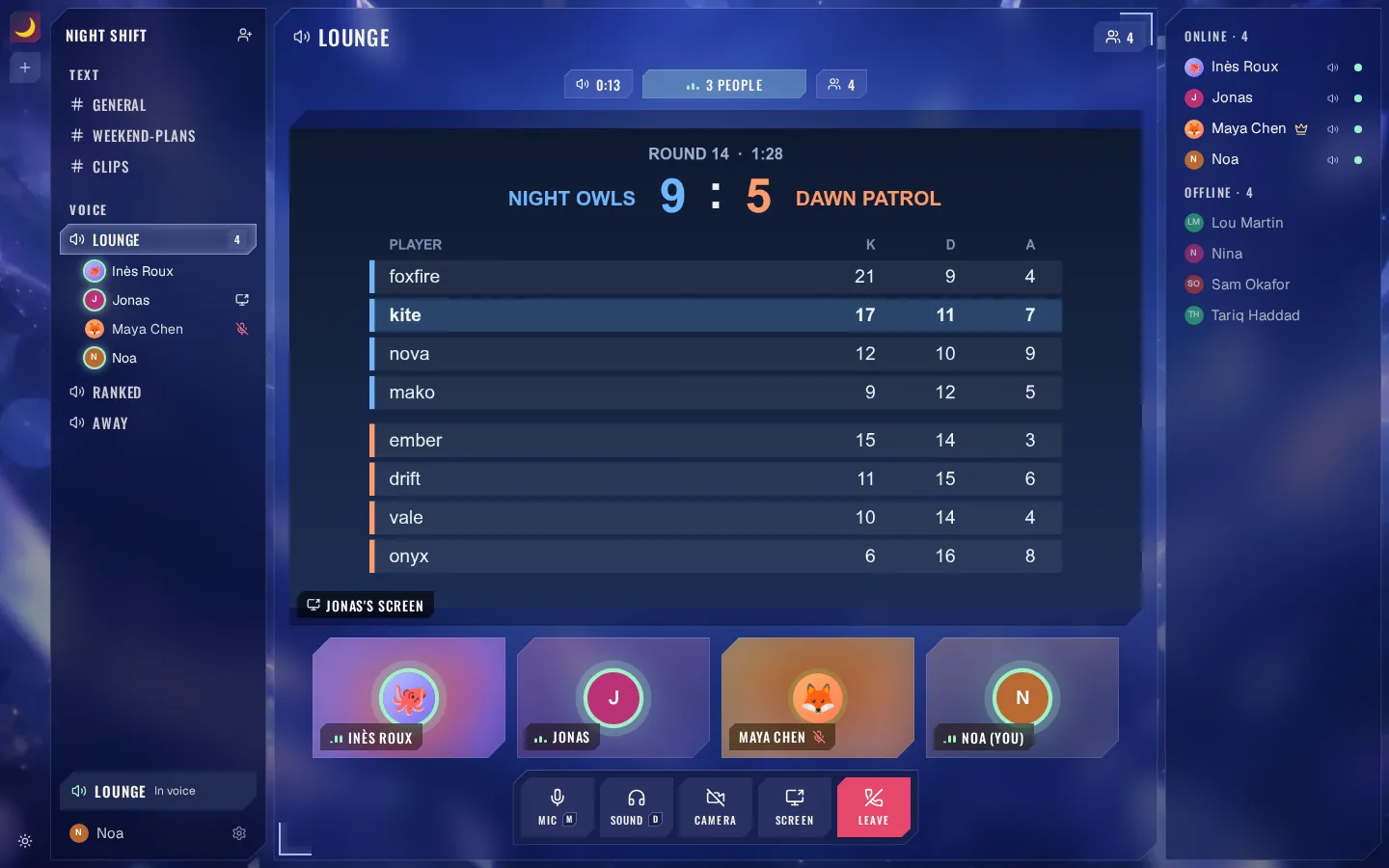
A voice channel is a room. Walk in and talk, turn a camera on, share your screen: everyone in it watches together.
Create a server, send one link, and talk: voice channels you walk into, with cameras and screen sharing, in the browser. Nothing to install, and a first name is all anyone is asked.
Free. One of you creates it. The others join with a link and a first name.
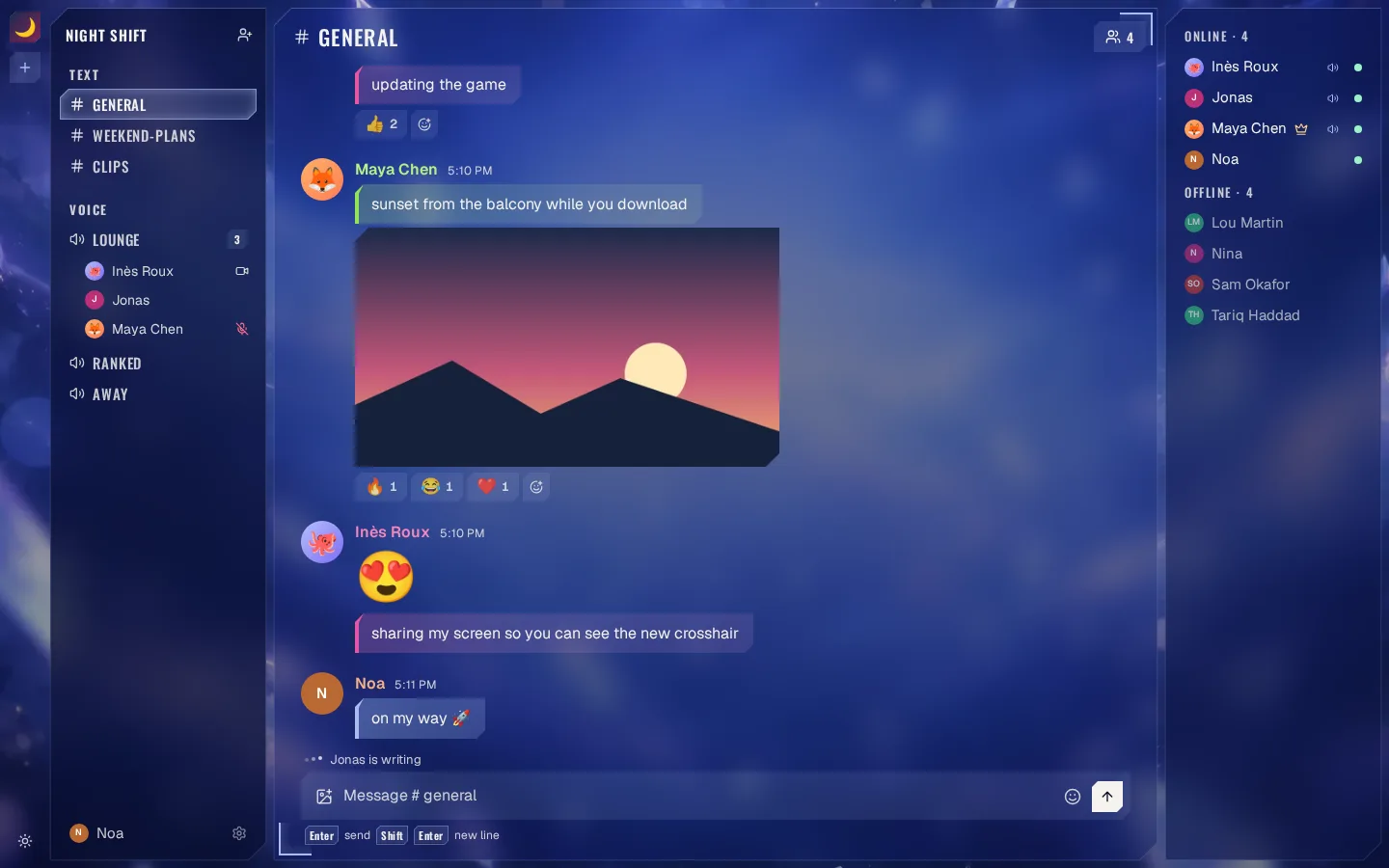
A voice channel is a room that stays open: walk in and you are talking with whoever is there, and the list shows who is in each one. Mute, deafen, push to talk, a volume for each person, noise suppression, a choice of microphone and speakers.
Calls pass through the server, so nobody in a call learns anybody's network address. A voice channel takes up to 50 people: that is a first limit, not a measured one.
A voice channel is a room. Walk in and talk, turn a camera on, share your screen: everyone in it watches together.

Send the invitation where your group already talks. It shows your server; they open it, type a first name, and they are in. Nothing to install.
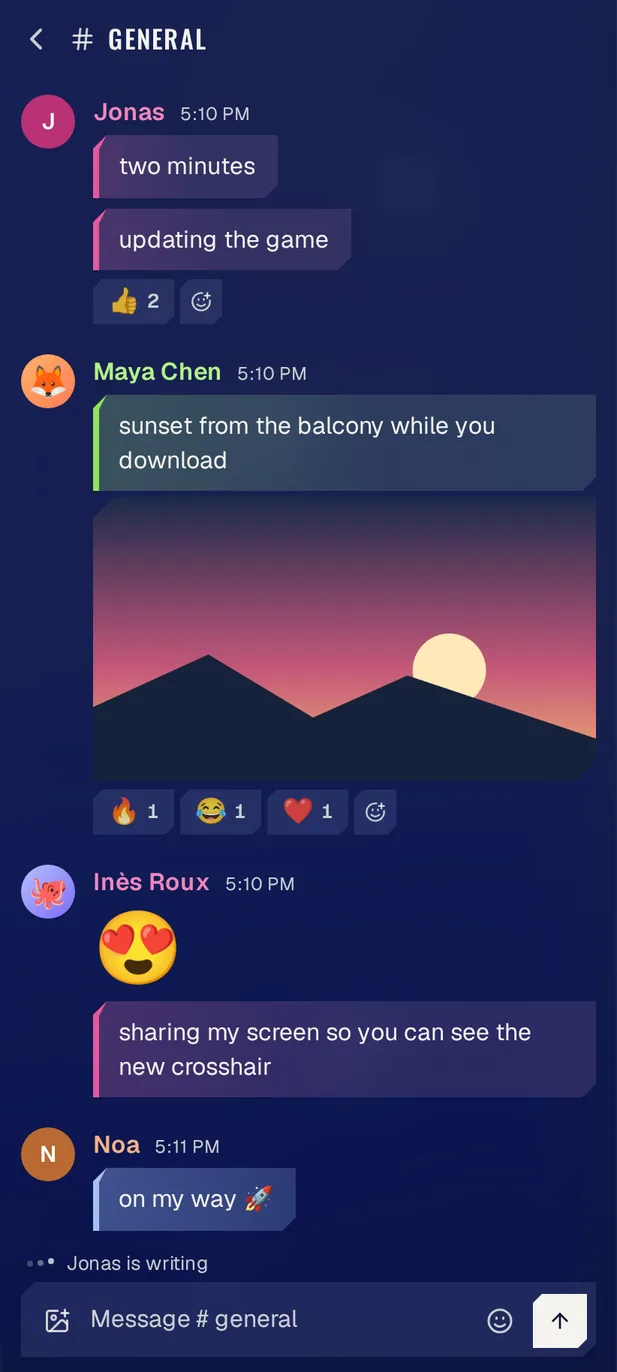
The same link opens the same server in a phone's browser.
Your server lives at the name you give it, at an address of its own.
Whoever creates it is its admin: you let people in, and you show them out.
No ID, no age check, no phone number, no ads. A first name gets your friends in.
Why now: Discord estimates the age of accounts from how they behave, and says fewer than one in ten is then asked to prove it, with a selfie, a card or an ID, to reach what is meant for adults. Discord, 22 September 2026.
Creating a server, inviting your group and calling cost nothing. No card is asked.
The servers created here are hosted by Solar Beam Studio, in Finland, in the European Union.
Your messages are kept where the server is hosted, so your group can read them back. They are not encrypted end to end: whoever hosts a server can open what is written in it.